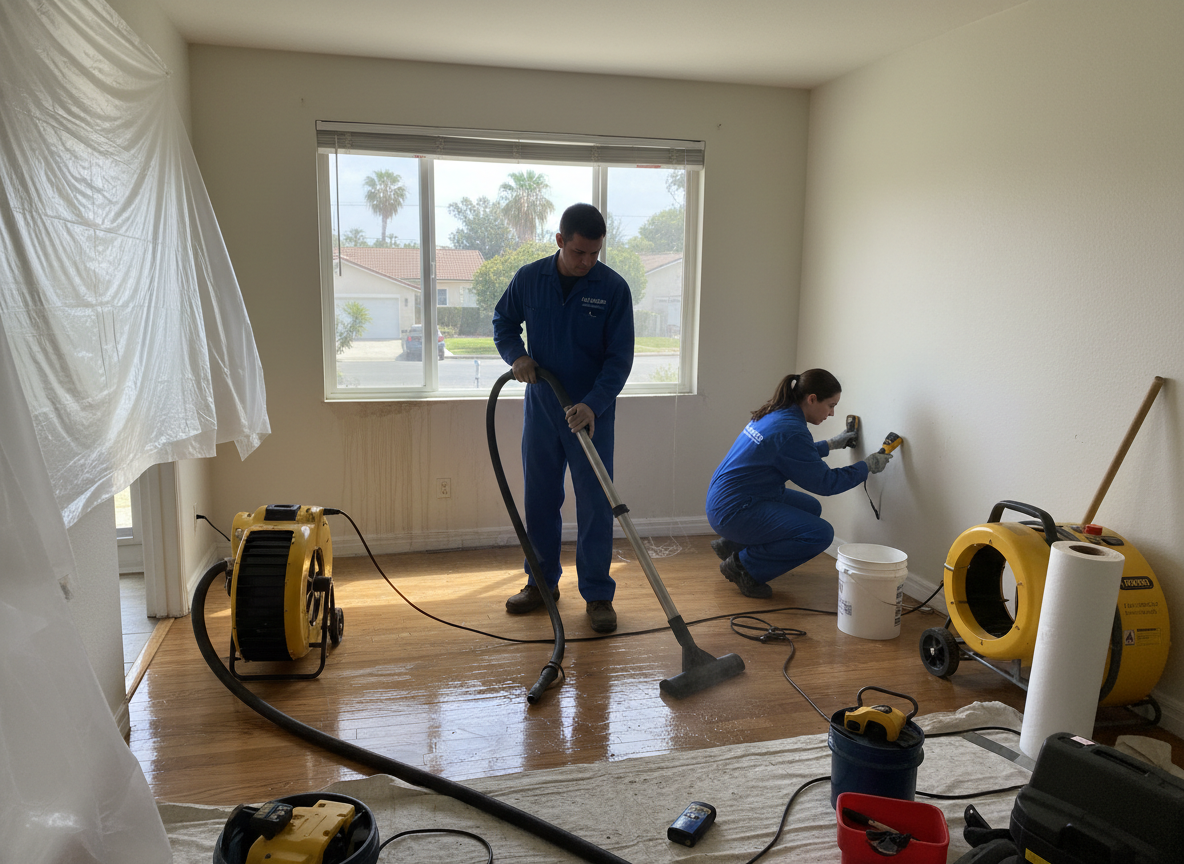
San Jose homes built before the 1980s in neighborhoods like Japantown and Alum Rock often feature older galvanized plumbing and slab foundations that allow water to migrate under floors during winter rains. Mild Mediterranean summers speed surface drying but trap moisture in stucco walls and crawlspaces common in Evergreen and Cambrian areas, requiring moisture meters and targeted dehumidification to prevent hidden rot in framing lumber.
Santa Clara County building codes require permits for any structural repairs exceeding minor drywall patches, so crews must document affected load-bearing elements before replacing sections in homes near San Jose City Hall or the Tech Museum. Sloped lots in Almaden Valley direct runoff toward foundations, creating repeated saturation cycles that demand French drain tie-ins or exterior grading corrections alongside interior repairs.
Nearby cities like Milpitas and Campbell share similar alluvial soil conditions that retain water longer than upland areas, extending drying times for carpet pads and subfloors. Technicians routinely pull baseboards early to inspect for wicking into particleboard cabinets, a common failure point in 1970s tract homes where vinyl flooring was installed directly over concrete.
Drywall tape joints in multi-story homes near Winchester Mystery House frequently separate after ceiling leaks, requiring full ceiling replacement rather than spot repairs to restore fire-rated assemblies. Seasonal wind-driven rain through window seals in Downtown San Jose high-rises adds another variable, often requiring negative air machines during extraction to protect adjacent units.
Technician insight
In San Jose, the thing that catches most people out with Water Damage Repair is how quickly water travels under the slab foundations common in 1960s–1970s homes in Alum Rock and Cambrian during our winter rains, so what looks like a small bathroom leak often means pulling base cabinets and checking the garage slab edge before any drying can start.
Willow Glen Ceiling Leak
A homeowner in Willow Glen noticed brown stains on the living room ceiling after heavy rain. Inspection found a cracked roof vent pipe allowing water to pool above the drywall and wick into insulation. Crews removed the affected ceiling section, dried the joist cavity over four days, and replaced drywall and insulation to match the original texture.
Water Damage Repair Services We Offer
✓Emergency Water Extraction
Rapid removal of standing water from basements and slabs using truck-mounted pumps sized for Santa Clara County residential volumes before it reaches electrical panels or HVAC systems.
✓Structural Drying and Dehumidification
Placement of commercial air movers and low-grain dehumidifiers to pull moisture from hardwood floors and wall cavities typical in Willow Glen and Cambrian Park homes.
✓Drywall and Insulation Replacement
Cut-out and reinstall of water-affected drywall plus blown-in or batt insulation replacement to meet current Santa Clara County energy codes in older Alum Rock properties.
✓Subfloor and Flooring Repair
Removal of saturated particleboard or plywood subfloors followed by new underlayment installation under tile or hardwood in Evergreen and Almaden Valley homes.
✓Sewage and Category 3 Cleanup
Full containment, extraction, and antimicrobial treatment of contaminated water from backed-up sewer lines common in flat sections of Japantown and near San Jose Arena.
Water Damage Repair Cost in San Jose, CA
| Service | Typical Range | What Affects It |
|---|---|---|
| Initial Assessment And Moisture Mapping | Free | During listed business hours at the Snell Ave location |
| Water Extraction Per Room | $450–$900 | Varies with water depth and access in slab homes |
| Full Structural Drying | $800–$2,200 | Includes equipment for 3–7 days based on material type |
| Drywall Removal And Replacement | $1.80–$3.50 per sq ft | Includes insulation and texture match in pre-1980 homes |
| Subfloor Repair | $6–$12 per sq ft | Higher in areas with radiant heating or complex layouts |
Ranges are typical for San Jose, CA and confirmed with an exact written quote before any work starts.
How it works
- 1
On-Site Assessment
Technicians inspect all affected rooms, use moisture meters on walls and floors, and document the water source while noting construction type common to the neighborhood.
- 2
Water Removal
Standing water is extracted with pumps and wands, followed by immediate removal of saturated carpet pads and baseboards to expose hidden moisture.
- 3
Drying Phase
Air movers and dehumidifiers run continuously with daily moisture readings until materials reach acceptable levels for the local climate.
- 4
Repair And Restoration
Damaged drywall, insulation, and flooring are replaced, with final checks for remaining moisture before returning the space to pre-loss condition.
Pricing
Upfront written quotes after inspection; final cost depends on water category, affected square footage, and whether structural elements require permits.