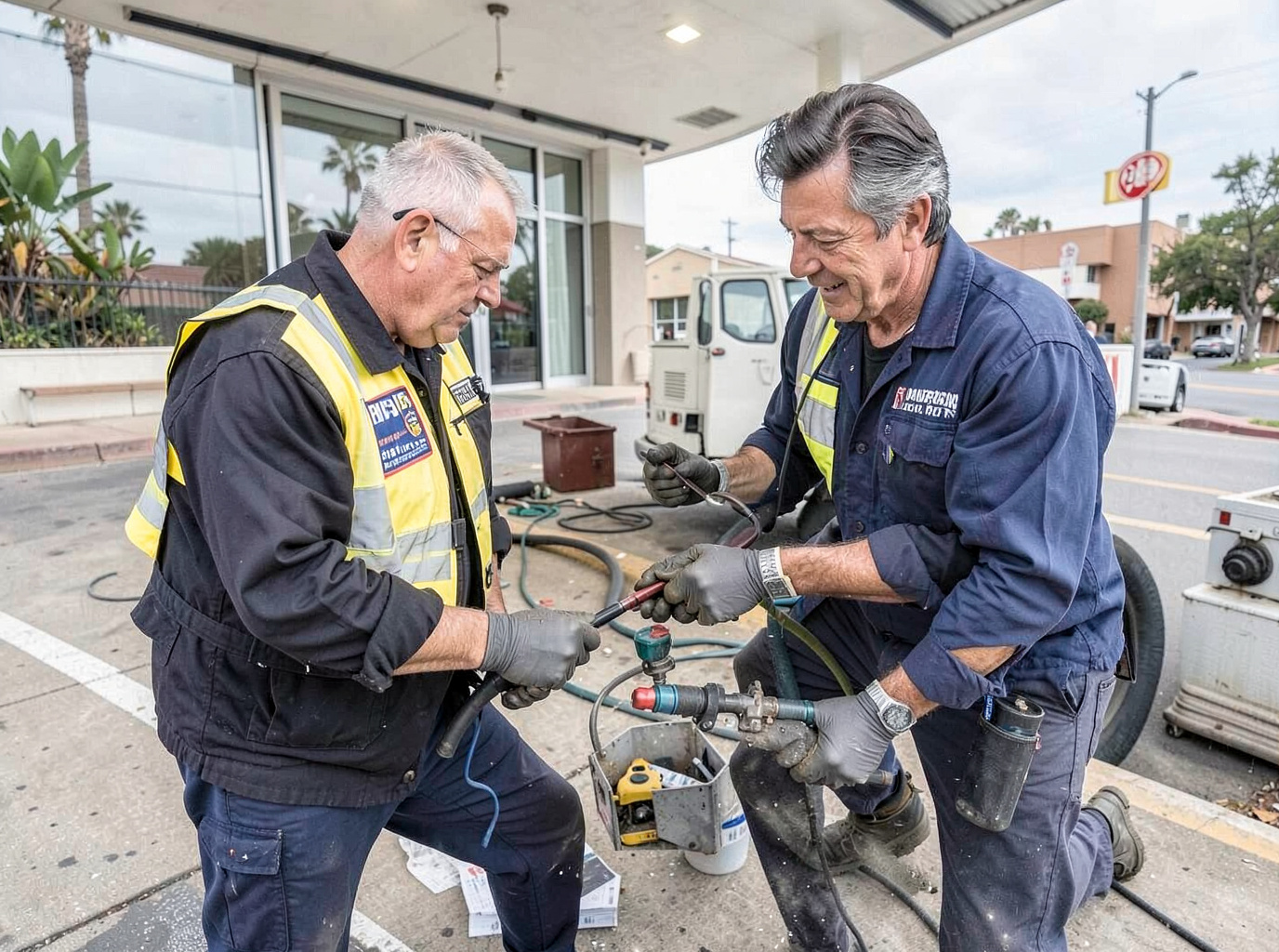
San Jose homes built before 1980 in neighborhoods like Alum Rock and Japantown often sit on concrete slabs with copper or galvanized lines that corrode over decades. When a supply line bursts, water travels under the slab and into wall cavities, requiring extraction equipment that reaches behind baseboards without full demolition. Technicians must account for the mild Mediterranean climate where warm dry summers can mask ongoing moisture that later fuels mold in crawl spaces common in Evergreen and Cambrian properties.
Santa Clara County building codes require proper moisture mapping before any reconstruction, especially near landmarks such as the Tech Museum or San Jose Arena where commercial structures mix with older residential stock. Portable extractors and air movers must be staged to avoid tripping GFCI circuits in older electrical panels found in Willow Glen bungalows. Failure to pull water from under vinyl or hardwood within the first hours allows it to wick into subfloors, raising repair costs when the job moves into nearby cities like Campbell or Milpitas.
After initial removal, crews document hidden pockets using infrared cameras because the area’s occasional winter rains can re-saturate soil against foundations in Almaden Valley. This step prevents callbacks when homeowners later notice musty odors in finished basements or garages converted during the 1990s housing boom.
Technician insight
In San Jose the thing that catches most people out with Emergency Water Removal is how fast water travels under the slab in pre-1970 homes in Japantown and Alum Rock; the dry summer air hides the moisture until it reaches the drywall from below, forcing extra demolition that could have been avoided with earlier extraction.
Evergreen slab leak after washing machine failure
Water from a burst supply line spread under the slab of a 1978 Evergreen home. Extraction crews pulled standing water from the utility room and adjacent hallway, then set drying equipment beneath the floor through small access points. Daily readings confirmed the slab dried within four days, allowing the homeowner to avoid full kitchen tear-out.
Emergency Water Removal Services We Offer
✓Slab Leak Water Extraction
Targeted removal of water that has migrated beneath concrete slabs common in San Jose homes built before 1990, using specialized wands to limit floor demolition.
✓Crawl Space Flood Extraction
Clear standing water from underfloor areas in Willow Glen and Cambrian properties where older vents allow rainwater or pipe leaks to pool against soil.
✓Appliance Leak Containment
Immediate pump-out and drying after water heater or washing machine failures in multi-story homes found throughout Downtown San Jose and Japantown.
✓Storm Water Basement Removal
Extraction following heavy winter rains that overwhelm older foundation drains in Alum Rock and Evergreen neighborhoods near San Jose City Hall.
✓Carpet and Pad Water Removal
Lift and dispose of saturated flooring materials while extracting trapped moisture from subfloors in single-family homes across Santa Clara County.
Emergency Water Removal Cost in San Jose, CA
| Service | Typical Range | What Affects It |
|---|---|---|
| Standard room extraction | $450–$850 | Single-story homes with accessible carpet and pad |
| Crawl space or slab work | $900–$1,600 | Older Alum Rock or Willow Glen properties with limited access |
| Multi-room or basement | $1,200–$2,400 | Evergreen homes after storm runoff |
| Equipment rental per day | $150–$300 | Additional days after initial extraction |
Ranges are typical for San Jose, CA and confirmed with an exact written quote before any work starts.
How it works
- 1
On-Site Assessment
Technicians arrive from the Snell Avenue base and map moisture with meters and cameras in affected rooms of San Jose homes.
- 2
Water Extraction
Portable and truck-mounted units pull standing water from slabs, carpets and crawl spaces before it spreads to adjacent units.
- 3
Initial Drying Setup
Air movers and dehumidifiers are placed to begin reducing moisture levels in wall cavities and underfloor areas.
- 4
Daily Monitoring
Readings are recorded each visit until drywall and subfloors reach safe levels for reconstruction.
Pricing
Pricing varies by water volume, access difficulty, and whether hidden slab or crawl space work is required.